
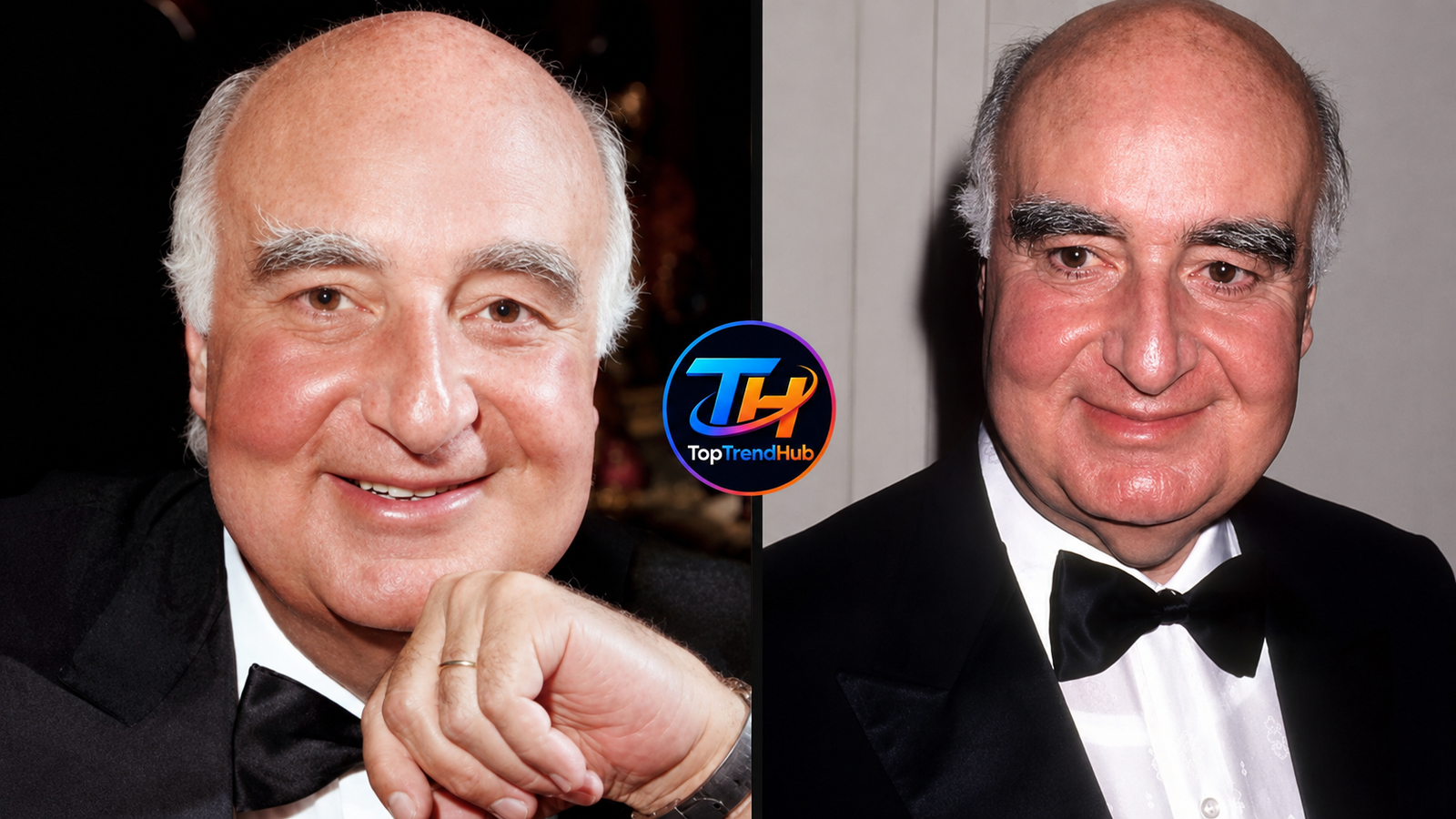
Edmond Safra was one of the most respected and influential bankers of the twentieth century, a man who built a private banking empire spanning more than thirty countries while remaining deeply devoted to his family’s religious and cultural roots. Decades after his sudden and mysterious death in Monaco, his story continues to fascinate the public, most recently reignited by a Netflix true crime documentary that introduced his life to a whole new audience. This article brings together the full, detailed story of Edmond Safra, from his early years in Beirut and his family’s banking legacy to his rise in global finance, his philanthropic contributions, and the strange and tragic circumstances surrounding his death.
Who Was Edmond Safra?
Edmond Jacob Safra was born on August 6, 1932, in Beirut, in what was then French-controlled Lebanon, into a well-established Sephardic Jewish banking family with roots tracing back to Aleppo, Syria, during the era of the Ottoman Empire. He grew into one of the most accomplished private bankers in modern history, known for an almost unmatched reputation for trust, financial discipline, and discretion among wealthy clients around the world.
Despite his extraordinary wealth, Safra was widely known for living a relatively modest and private lifestyle, favoring custom-tailored navy suits and quiet dinners over public displays of luxury. He died on December 3, 1999, at the age of 67, in a fire at his penthouse apartment in Monaco, an event that shocked the global financial community and sparked a wave of speculation that persists to this day.
Early Life in Beirut and Family Banking Roots
Edmond grew up as part of a prominent banking family led by his father, Jacob Safra, a respected community leader in Beirut who was also a major patron of local synagogues and charitable causes. The Safra family had been involved in banking and gold trading for generations, financing trade between major cities including Beirut, Aleppo, Istanbul, and Alexandria long before Edmond was born, giving him a deeply rooted understanding of finance from an early age.
At just fifteen years old, in 1947, Edmond was sent by his father to Milan, Italy, to help establish and expand the family’s gold-trading operations. Within a short time, the teenage Safra was already identifying arbitrage opportunities and coordinating gold trades between Europe, the Middle East, and Hong Kong, a remarkable level of responsibility for someone so young. As political unrest and rising instability affected Jewish communities in Aleppo and Beirut during the 1950s, Edmond played a critical role in helping guide his family’s relocation, eventually recommending that they move to Brazil.
Founding Banco Safra and Expanding Into Global Finance
Following the family’s move to Brazil, Edmond and his father Jacob founded Banco Safra S.A., laying the foundation for what would eventually become a major international banking network. This period marked Edmond’s transition from a young gold trader into a serious financial institution builder, applying the lessons he had learned in Aleppo, Beirut, and Milan to a much larger global stage.
Not long after establishing operations in Brazil, Edmond set his sights on Switzerland, founding the private Trade Development Bank in Geneva. This institution catered specifically to wealthy private clients seeking highly personalized and discreet banking services, and it quickly built a reputation for reliability. Years later, Safra sold Trade Development Bank to American Express, a transaction that further expanded his influence and reputation within elite international banking circles.
Building Republic National Bank of New York
Perhaps Edmond Safra’s most well-known achievement in the United States was the founding of Republic National Bank of New York, along with its parent company, Republic New York Corporation. The bank became widely known for its unusual and memorable marketing tactics, including giving away televisions and other appliances to new clients, while the bulk of its actual business focused on corporate and government lending rather than everyday retail banking.
Safra also served as Chairman of Safra Republic Holdings S.A., the bank’s European private banking subsidiary, further extending his reach across international markets. Even as his banking empire grew to include operations in London and other major financial centers, Safra remained deeply hands-on, personally meeting with major clients and making key investment decisions himself well into his later years, a trait that set him apart from many other executives running large financial institutions.
A Conservative, Trust-Driven Banking Philosophy
One of the most defining aspects of Edmond Safra’s career was his intensely conservative and trust-based approach to banking, a philosophy shaped heavily by his religious upbringing and his father’s teachings. He reportedly recalled his father once asking him, “How do you expect people to trust you if they see you gambling?” a lesson that stayed with him throughout his career and shaped his aversion to speculative investment strategies.
Rather than participating heavily in the stock market or high-risk retail lending, Safra focused primarily on corporate and government lending, along with carefully calculated low-risk arbitrage opportunities. He believed that the core mission of any bank should be to provide stability and security to the communities and clients it served, a philosophy that, in hindsight, appears especially notable given the number of financial scandals and reckless risk-taking that later plagued the broader banking industry.
Philanthropy and the Edmond J. Safra Foundation
Beyond his banking achievements, Edmond Safra was deeply committed to philanthropy throughout his life, funding synagogues, hospitals, university programs, and academic scholarships across numerous countries. This generosity reflected the strong sense of communal duty passed down to him by his father, Jacob Safra, who was himself a well-known philanthropic figure within Beirut’s Jewish community.
After Edmond’s death, his wife, Lily Safra, took over as chairwoman of the Edmond J. Safra Philanthropic Foundation, ensuring that his charitable vision would continue for future generations. Under her leadership, the foundation went on to support significant initiatives, including the Edmond and Lily Safra Center for Brain Sciences, along with countless educational, medical, and community programs around the world, carrying his legacy of generosity forward long after his passing.
Selling the Banking Empire to HSBC
In 1999, in the months leading up to his death, Edmond Safra made the major decision to sell his holdings in Republic New York Corporation and Safra Republic Holdings to the London-based banking giant HSBC in a deal reportedly valued at approximately 10.3 billion dollars. This sale marked a significant turning point, effectively ending decades of independent operation for the banking empire he had spent his life building.
The unusual terms surrounding the sale, including what some observers described as an unexpectedly generous discount offered to HSBC, raised questions within international financial circles at the time. Reports also suggest the deal contributed to underlying tension within the extended Safra family regarding future control and inheritance of the broader family banking interests, adding a layer of complexity to the final chapter of Edmond’s remarkable career.
The Tragic Fire and Mysterious Death in Monaco
On the night of December 2 into the early morning of December 3, 1999, a fire broke out in Edmond Safra’s heavily secured penthouse apartment located in the “La Belle Époque” building on Avenue d’Ostende in Monaco. Safra, who had been battling Parkinson’s disease at the time, died from smoke inhalation, along with his nurse, Vivian Torrente, who also tragically lost her life in the blaze.
Investigators determined that another member of Safra’s medical staff, an American nurse named Ted Maher, had deliberately started the fire in a wastepaper basket placed directly beneath a smoke detector. According to the official version of events established in court, Maher then staged a fake assault on himself, inflicting knife wounds on his own abdomen and thigh, in an apparent attempt to appear as a hero who had fought off intruders. Believing an armed attack was underway, Safra reportedly barricaded himself with his nurse inside a secure room of the apartment, but the fire spread too quickly, and emergency responders were unable to reach them before it was too late. Maher was later convicted of arson causing death.
Netflix’s “Murder in Monaco” Reignites Public Interest
More than two decades after Edmond Safra’s death, his story returned to widespread public attention with the release of Netflix’s true crime documentary “Murder in Monaco” on December 17, 2025. Directed by Hodges Usry, the ninety-minute film revisits the strange and unsettling circumstances surrounding his death, featuring exclusive interviews with Ted Maher himself, along with investigators and individuals connected to the case.
The documentary also details what happened to Maher following his original conviction, including a failed prison escape attempt and a separate, later criminal case in which he was found guilty in March 2025 of orchestrating a murder-for-hire plot while incarcerated, resulting in an additional nine-year prison sentence. Maher is reportedly currently held at a medical correctional facility in Albuquerque, New Mexico, where he is undergoing treatment for throat cancer. The documentary quickly climbed into Netflix’s top-watched titles worldwide, introducing an entirely new generation of true crime audiences to Edmond Safra’s extraordinary life and puzzling death.
Conclusion
Edmond Safra’s life story combines remarkable financial achievement, deep-rooted family values, and one of the most puzzling true crime mysteries of the modern era. From his early days as a teenage gold trader in Milan to building one of the most trusted private banking empires in the world through institutions like Republic National Bank of New York and Trade Development Bank, his career reflected a rare balance of ambition, discipline, and caution. His philanthropic legacy continues today through the Edmond J. Safra Foundation and institutions bearing his name across the globe, while renewed attention from Netflix’s “Murder in Monaco” ensures that his extraordinary story, along with the haunting questions surrounding his final night, will continue to be examined and remembered for years to come.