
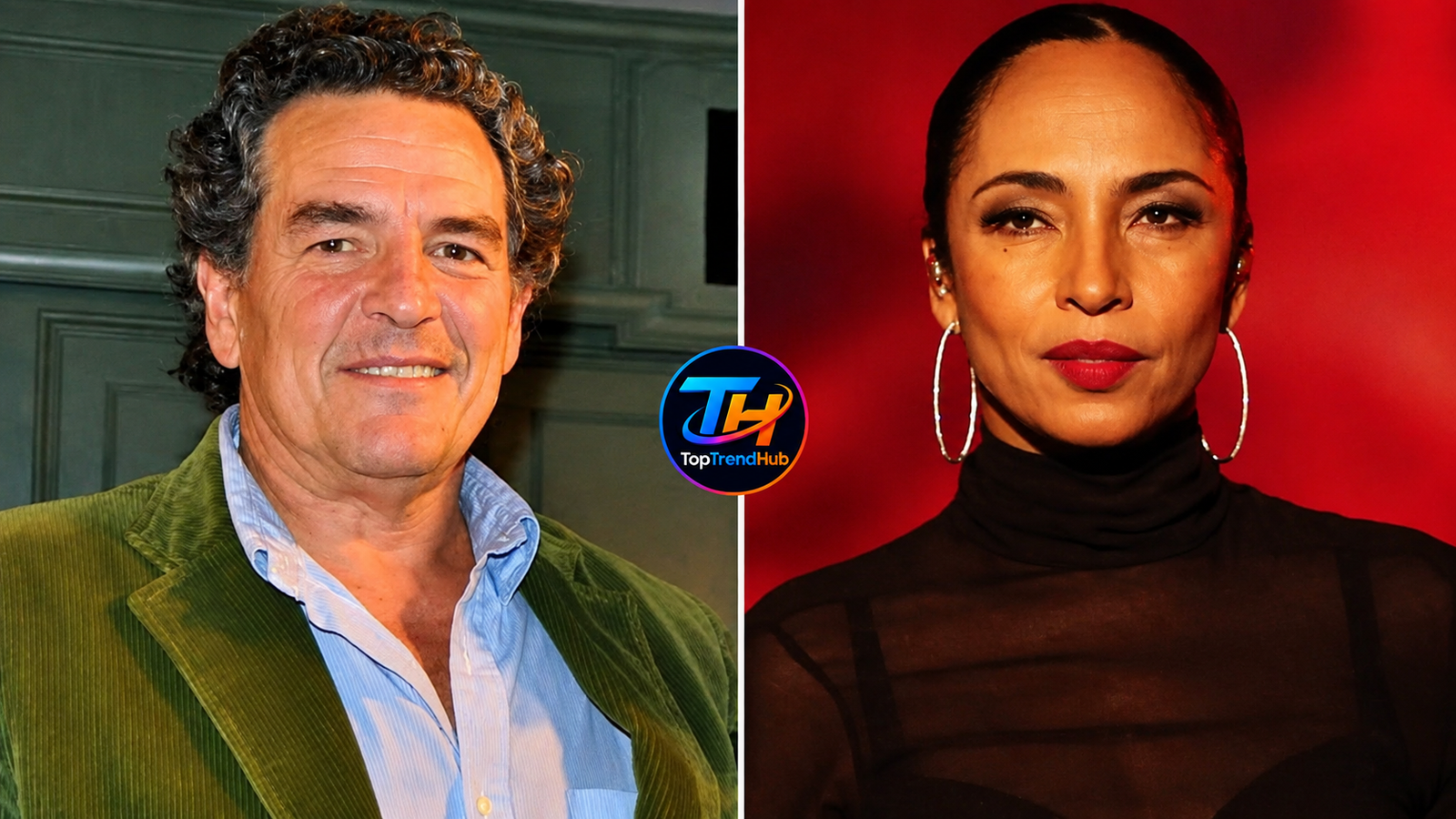
Carlos Scola Pliego is a Spanish filmmaker whose name continues to attract attention because of his connection with one of the most recognizable voices in music, Sade Adu. Although many people know him mainly as Sade’s former husband, his professional background goes beyond his personal relationship. Carlos worked behind the camera in the film industry, taking on roles connected with assistant directing, script supervision, directing, writing, and other production responsibilities.
His story is also unusual because so much of his private life has remained away from the public eye. Sade’s official biography confirms that she married Spanish film director Carlos Scola Pliego in 1989, but detailed information about Carlos’s childhood, education, exact age, family, finances, and present life is not strongly documented. The most reliable way to understand his story is therefore to focus on his documented professional work, his marriage to Sade, and the limited information that can be responsibly established about his personal life.
Who Is Carlos Scola Pliego?
Carlos Scola Pliego is a Spanish film professional who worked mainly behind the scenes. His name appears in film records both as Carlos Scola and Carlos Scola Pliego, with credits connected to assistant directing, directing, writing, and other filmmaking responsibilities. His career demonstrates that he had an identity within the film industry before his name became widely associated with Sade Adu.
His professional background is particularly interesting because filmmaking often involves many people who never become household names. Assistant directors, script supervisors, production staff, and other crew members are essential to the process but usually receive far less public attention than actors and directors. Carlos appears to have developed his career through these practical filmmaking roles before taking on his own directing and writing projects.
The connection with Sade naturally changed the level of public interest surrounding him. Sade’s official biography specifically describes Carlos as a Spanish film director and confirms their marriage in 1989. Even so, his career should not be reduced entirely to his relationship with the singer.
Carlos Scola Pliego’s Early Life and Background
The early life of Carlos Scola Pliego remains one of the least documented areas of his biography. Reliable public sources do not clearly establish his exact date of birth, birthplace, parents, siblings, childhood experiences, or detailed education. Various websites publish precise personal information, but many of those claims are not supported by strong primary sources.
His Spanish background and connection with filmmaking are much easier to establish. Sade’s official website identifies him as a Spanish film director, while professional film records connect him with Spanish and international productions. This gives a useful foundation for understanding his background without inventing details that have never been properly confirmed.
The lack of information about his childhood may also reflect his generally private approach to public life. Carlos did not become a celebrity through acting or music, and he has not maintained the kind of public profile that would normally generate extensive interviews and biographical coverage. As a result, many questions about his early years remain unanswered.
How Carlos Scola Pliego Built His Film Career
Carlos developed his career through behind-the-camera film work, particularly assistant-director and production responsibilities. Available film records connect him with several productions from the 1980s, giving evidence of a professional career that existed independently of his later relationship with Sade.
His credits include work connected with productions such as Hundra, G’olé!, Scarab, Never Say Never Again, The Curse of the Pink Panther, Eleni, and Christopher Columbus. His work on Christopher Columbus is particularly notable because he was credited as assistant director for the Spanish production work. These records place him within international filmmaking rather than showing him as someone known only through a celebrity marriage.
Working as an assistant director can involve considerable responsibility. The role can require coordination between departments, production planning, scheduling, locations, and communication among members of the filmmaking team. While audiences rarely recognize assistant directors by name, such positions provide valuable practical experience and can lead toward more creative responsibilities.
His Work as a Director and Writer
Carlos Scola Pliego eventually moved beyond supporting roles and became involved in directing and writing his own projects. Among the works associated with his name are Ngira: Gorilas en la montaña and Donde termina el corazón. Film records identify him with directing and writing responsibilities on these productions.
Ngira: Gorilas en la montaña is particularly relevant because it shows Carlos working on a documentary-style project. IMDb identifies the 1988 production as a short and credits Carlos with directing and writing responsibilities. His involvement demonstrates that he was not limited to assisting other filmmakers and had an interest in developing projects from a creative position.
His work on Donde termina el corazón, released in 1989, adds another important chapter to his professional story. He is credited as director and writer of the production. Together, these projects help establish Carlos as a filmmaker with creative ambitions rather than simply a crew member working in the background.
Carlos Scola Pliego and Sade Adu
Carlos became much more widely known after his relationship with Sade Adu. Sade is the British-Nigerian singer and songwriter whose band became internationally successful during the 1980s. Her music career made her one of the most recognizable artists of her generation, while Carlos remained largely outside mainstream celebrity culture.
Sade’s official biography confirms that she married Spanish film director Carlos Scola Pliego in 1989. The marriage therefore became one of the most visible parts of Carlos’s public biography, even though his own professional career had developed separately within film.
Their relationship also reflected a connection between two creative industries. Sade worked in music and performance, while Carlos worked in cinema and production. The couple’s different professional worlds naturally attracted public curiosity, but both individuals have generally maintained considerable privacy around their personal lives.
When Did Carlos Scola Pliego and Sade Adu Divorce?
Carlos Scola Pliego and Sade Adu’s marriage ended in divorce in 1995, according to widely cited biographical records. Sade’s official biography confirms the 1989 marriage, while professional biographical records associated with Carlos give 1995 as the year the marriage ended.
The exact circumstances surrounding their separation are much less clearly documented. Many online articles make claims about the reasons for the divorce or describe private events in detail, but these accounts are not equally supported by reliable evidence. It is therefore important not to present speculation as established history.
The most responsible account is simple: Carlos and Sade married in 1989 and later divorced in 1995. Their relationship remained relatively private, and there is limited authoritative information describing what happened between them behind closed doors.
Carlos Scola Pliego’s Later Career
Carlos’s connection with filmmaking appears to have continued beyond his best-known projects of the 1980s. Available film records connect him with Goal II: Living the Dream, a 2007 football film, through additional crew work. This later connection shows that his professional history extended into the 2000s.
The nature of later film work should be described carefully because online databases do not provide a complete biography of every year of his career. A documented credit can establish that he participated in a production, but it cannot automatically tell us how active he remained in the industry afterward.
This is particularly important when discussing what Carlos Scola Pliego does today. There is no strong public record that provides a detailed account of his current profession or daily activities. His absence from celebrity media should not be interpreted as proof that he stopped working completely. It simply means that his later life is not extensively documented.
Carlos Scola Pliego’s Age, Family, and Personal Life
Questions about Carlos Scola Pliego’s age are common, but his exact date of birth has not been reliably established in the strongest public sources. His long film career provides some context about the period in which he was professionally active, but it cannot be used to calculate a precise age without a confirmed birth date.
Similar uncertainty surrounds his family background. There is no strong public documentation establishing detailed information about his parents, siblings, childhood home, or education. Some websites publish such information, but repeated claims across websites do not necessarily make those claims reliable.
The same caution applies to questions about Carlos’s net worth, height, current relationship status, residence, and other personal details. There is no trustworthy public financial record that establishes his net worth, and private information should not be presented as fact simply because it appears on low-quality biography websites.
Where Is Carlos Scola Pliego Now?
Carlos Scola Pliego has maintained a very low public profile for many years. There is no dependable current source providing a detailed account of where he lives, what his daily routine looks like, or whether he remains professionally active in filmmaking. This limited visibility has contributed to continuing curiosity about his life.
His privacy is especially notable because his former wife remains a major figure in international music. Sade’s official biography itself discusses her reluctance toward intrusive media attention and explains that she has generally kept her personal life away from excessive publicity. Carlos appears to have followed a similarly private path.
Rather than filling these gaps with speculation, it is more accurate to acknowledge what is unknown. His documented film career, his marriage to Sade, and the broad timeline of his professional life can be discussed with confidence. His current home, finances, relationships, and private activities cannot be established to the same standard.
Conclusion
Carlos Scola Pliego is much more than a name connected with Sade Adu. He was a Spanish film professional who developed experience in assistant directing and other production roles before moving into directing and writing. His documented career includes work associated with international productions and creative projects such as Ngira: Gorilas en la montaña and Donde termina el corazón.
His marriage to Sade Adu remains the main reason his name continues to attract public interest. The couple married in 1989, during a period when Sade was already an internationally recognized music artist, and their marriage later ended in divorce in 1995. However, much of their private relationship remains undocumented, and claims about the reasons for their separation should be treated carefully.
Carlos’s later life is similarly private. While a later film credit connects him with Goal II: Living the Dream, there is not enough reliable public information to describe his current career or personal circumstances in detail. What remains clear is that he had a genuine professional identity in filmmaking and that his marriage to Sade brought that otherwise private career to international public attention.
The most accurate portrait of Carlos Scola Pliego is therefore that of a Spanish filmmaker who worked behind the camera, developed his own creative projects, married one of the world’s best-known singers, and then largely remained away from the spotlight. His story continues to interest readers precisely because so much of it has remained private.